
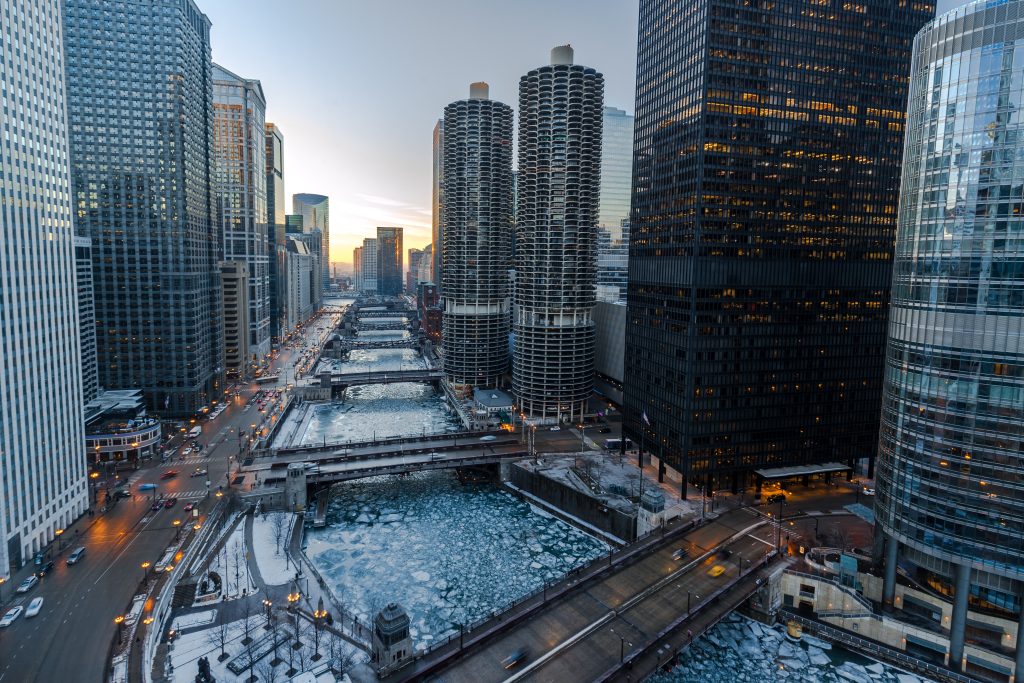
Summer is fun. Chicago winter is character-building. The good news: fall and winter can be the best time to correct sun damage because you’re typically getting less direct sun exposure day to day. The cold wind, indoor heat, and dry air can make your skin more reactive, flaky, and sensitive, so your plan needs to be smart, not aggressive.
At Chicago Aesthetics Surgery & Med Spa, we treat sun damage and winter skin issues with a mix of laser and light treatments, peels, microneedling, and medical-grade skincare, customized to your skin type and downtime.
Quick takeaways
- Winter is ideal for pigment treatments, but you still need daily SPF (yes, even in Chicago winter). American Academy of Dermatology
- If your skin is dry or irritated, we often start by repairing the barrier first, then treat discoloration.
- For brown spots and uneven tone: IPL/BBL and PicoWay are common go-tos, sometimes paired with MOXI for overall texture.
- For texture, pores, and early lines: SkinPen microneedling, MOXI, or Icon 1540 are strong winter options.
- For peeling: expect visible flaking for several days with many chemical peels, so plan around work and events. Cleveland Clinic
Why winter makes your skin feel worse
Chicago winter hits your skin from multiple angles: cold outdoor air, heated indoor air, hot showers. All of these pull water out of the skin and can weaken the barrier, which makes discoloration look more noticeable. Dermatologists often recommend dialing back stronger anti-aging ingredients like retinoids and exfoliating acids in winter or using them less frequently.
What “sun damage” can look like in real life
Not everyone sees sun damage as obvious brown spots. You might notice:
- Uneven tone or freckling that doesn’t fade
- Dark spots that pop more when your skin is dry
- A “rough” makeup finish (texture)
- Redness or visible capillaries (often around the nose/cheeks)
A consultation helps us figure out whether you’re dealing with pigment, redness, texture, or a mix, because each responds best to different tools.
Best winter treatments we offer for sun damage and dullness
IPL Photofacial and BBL HEROic (for redness and brown spots)

Best for: visible sun spots, freckles, redness, and overall uneven tone.
IPL (and BBL, a more advanced form of broad-band light) uses controlled light energy to target pigment and redness. After treatment, spots can darken temporarily and then gradually fade as your skin clears them out.
What it feels like: quick snaps of heat, like a rubber band flick.
Typical series: multiple sessions for best results (especially if pigment has built up over years).
Winter tip: we’re careful with settings if you’re dry, recently tanned, or prone to melasma.
Chicago Aesthetics-only insight: If you commute and your face is constantly exposed to wind, we may recommend barrier support for 1–2 weeks before IPL/BBL so you’re less likely to get extra dryness afterward.
PicoWay (for stubborn pigment with minimal downtime)
PicoWay is a picosecond laser that can target pigment efficiently. The goal is to break pigment into tiny particles your body can clear over time.
Best for: sun spots and uneven pigmentation, especially when you want a lighter downtime footprint.
What it feels like: fast pinpricks of heat.
Downtime: often mild redness and a “sandpapery” feel for a few days, depending on what we treat.
Important: melasma is tricky and can worsen with heat or irritation, so we’ll screen carefully and may steer you toward a different plan if that’s your main concern.
MOXI and BBL + MOXI (for tone, texture, and “winter glow”)
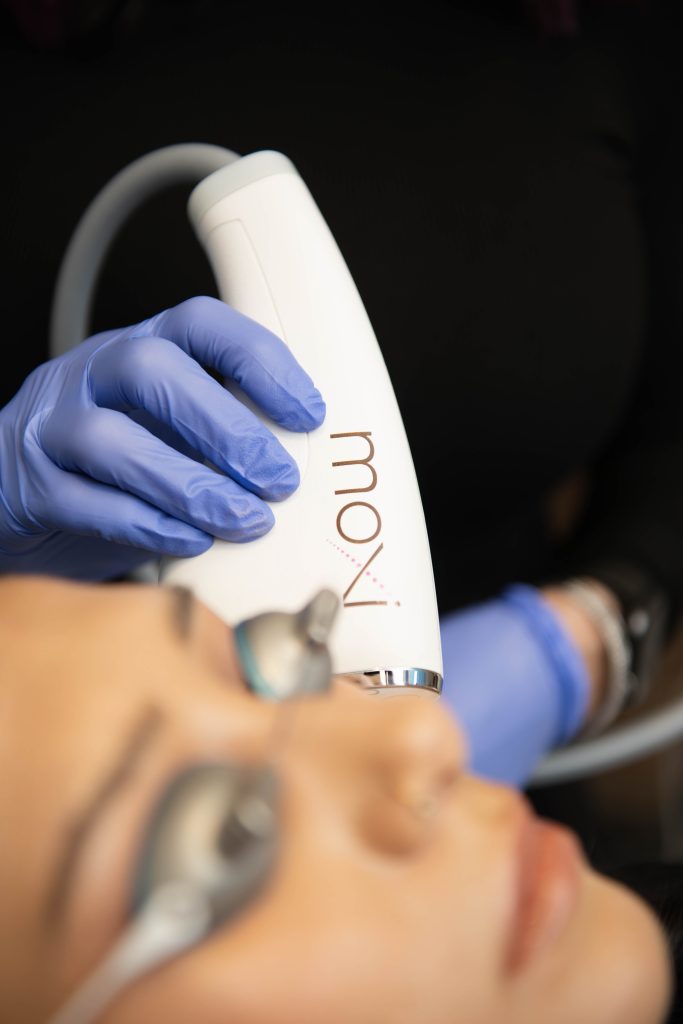
MOXI is a gentle fractional laser that targets sun damage and texture with a relatively manageable recovery. Pairing BBL + MOXI is popular in winter because you can address pigment (BBL) and texture (MOXI) in a coordinated plan.
Best for: early sun damage, dullness, rough texture, and fine lines.
Downtime: typically a few days of redness and a rough “coffee grounds” texture (varies by settings).
SkinPen microneedling (for texture, pores, and collagen support)
Microneedling creates controlled micro-injuries that trigger the skin’s natural repair response. It’s a great winter option because it can improve texture without relying on light-based energy.
Best for: texture, enlarged pores, acne scars, and fine lines.
Risks can include temporary redness, bruising, irritation, and (rarely) infection or scarring, which is why sterile technique and proper aftercare matter. Cleveland Clinic
Add-on we offer: VAMP™ (PDRN) can be applied topically right after treatments like microneedling, MOXI, Morpheus8, chemical peels, or laser resurfacing. The idea is simple: your skin is more receptive right after treatment, so applying supportive ingredients at the right time may help your skin feel calmer and more hydrated during recovery. In some cases, VAMP™ can also be injected as part of a personalized plan. Your provider will guide you on what fits your skin, goals, and downtime.
Sofwave (for skin tightening and collagen stimulation)
Sofwave is an ultrasound-based treatment that works beneath the surface to stimulate new collagen without damaging the outer layer of skin. Patients love it year-round because there is no peeling, needles, or real downtime to plan around.
Best for: mild to moderate skin laxity, early jowling, fine lines, and overall firmness of the face and neck.
What to expect: a warming sensation during treatment, followed by mild redness or swelling that typically resolves within a few hours to a day.
Pro tip: results build gradually over several months as collagen regenerates, so Sofwave is ideal if you want natural-looking tightening without a sudden or obvious change.
Chemical peels and VI Peel (for brightness and mild pigment)
Peels are a “chemical exfoliation” approach. Many patients love peels in winter because you can hide a little peeling under a scarf and plan around social events.
Best for: mild discoloration, dullness, rough texture, and breakouts (depending on peel type).
What to expect: redness followed by visible flaking/scaling for several days is common. Cleveland Clinic
Pro tip: if your skin is already chapped or irritated, we may delay the peel and focus on hydration first.
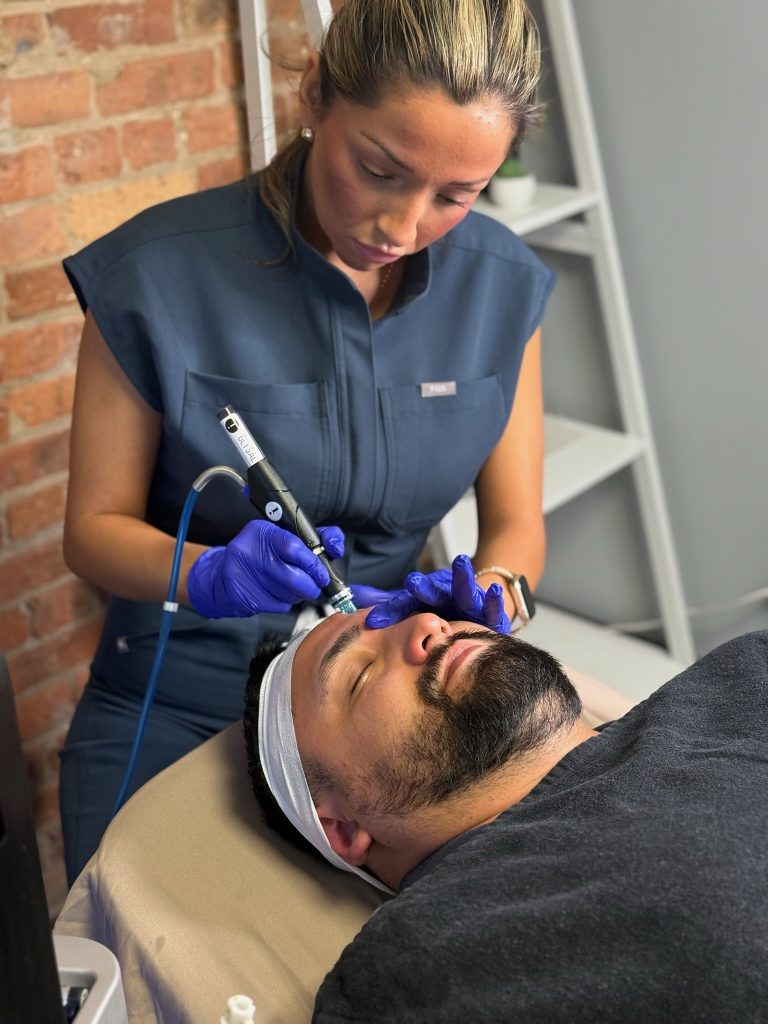
Hydrafacial and dermaplaning (for winter dryness and smooth makeup)
Best for: dry, dull skin and rough surface texture; great before events.
These are low-downtime ways to refresh the skin, especially when you’re not ready for peeling or lasers yet.
Risks and safety (and who should pause)
Winter doesn’t automatically make treatments safer. It just makes sun avoidance easier.
We’ll review:
- Your skin type and pigment risk (post-inflammatory hyperpigmentation)
- History of melasma
- Active acne, eczema, or very irritated skin
- Pregnancy/breastfeeding (some treatments or topicals may be deferred)
- Cold sores (you may need preventive medication with certain treatments)
Pro tip: SPF still matters in winter. Snow can reflect UV, and you can burn on bright days even when it’s freezing.
Sources
- American Academy of Dermatology: Winter skin care recommendations and dry-skin tips. American Academy of Dermatology+1
- American Academy of Dermatology: Winter sun protection and snow reflection awareness. American Academy of Dermatology
- Cleveland Clinic: Chemical peel expectations and typical peeling timeline. Cleveland Clinic
- Cleveland Clinic: Microneedling benefits and potential risks.
